From quiet classrooms to grand complexes, Saraswati Puja’s evolving nature


Kolkata: “Saraswati Mahabhage, Vidye Kamalalochane, Vishwaroope Vishalakshi, Vidyang Dehi Namostute”—a Sanskrit hymn seeking knowledge and wisdom from Goddess Saraswati—set the spiritual tone of Basanta Panchami in Bengal.
Recited with folded hands by children dressed in shades of yellow, the chant echoed softly in classrooms and courtyards, capturing the quiet devotion that defined the festival for decades.
Goddess Saraswati, revered in Hinduism as the embodiment of knowledge, wisdom and the arts, occupies a special place in the lives of students. Saraswati Puja, celebrated on Vasant Panchami, was once deeply rooted in educational spaces. Decorating school or college premises, hand-written invitation cards exchanged between institutions, and the careful preparation of offerings defined the occasion.
Even customs carried symbolic weight—children were often told to avoid tasting jujube fruit before it was offered to the goddess, a small act of restraint believed to reflect sincerity and academic dedication. Many households, too, organised individual pujas if a family member was still engaged in studies or artistic pursuits.
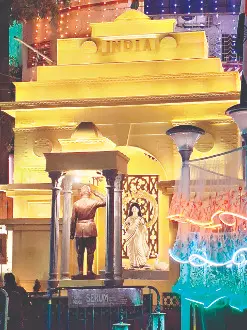
Over the years, this careful, personal mode of worship has transformed into a larger spectacle. Saraswati Puja is now frequently organised outside homes and institutions—within housing complexes, clubs and community grounds. The scale has expanded, as has the soundscape. Loud DJs, elaborate lighting and themed décor now dominate many celebrations.
A well-known housing complex in central Kolkata is organising as many as three Saraswati Pujas this year. “We have around 2,000 families living here,” said a member of the Puja committee. “For everyone’s convenience, three pujas are being arranged. The budget is around Rs 3 lakh for each.”
As high-rises replace old para neighbourhoods and the idea of community is reshaped, the nature of Puja, too, reflects this shift—moving from quiet reverence to collective grandeur, from whispered prayers to amplified celebration.