
EROs, not micro observers, can take final call on scrutiny: SC on Bengal SIR
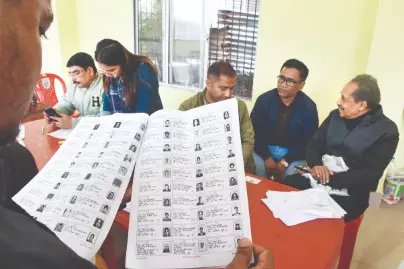


Kolkata: Clarifying that the final authority in the Special Intensive Revision (SIR) of electoral rolls lies with the Electoral Registration Officers (EROs), the Supreme Court on Monday extended by one week beyond February 14 the deadline for publication of the final electoral list in West Bengal to allow completion of scrutiny and decision-making on documents submitted by affected voters.
A Bench headed by Chief Justice of India (CJI) Surya Kant, along with Justices Joymalya Bagchi and N V Anjaria, issued a series of directions aimed at strengthening administrative support for the revision process while reaffirming the primacy of statutory election authorities.
The court directed the West Bengal government to ensure that all 8,505 Group-B officers, whose list was handed over to the EC in court on Monday, report to their respective District Electoral Officers (DEOs) by 5 pm on Tuesday. The Bench said these officers may be deployed as micro observers after a brief scrutiny of their biodata and training of one or two days.
It was clarified that the role of the micro observers would be limited to assisting the EROs, and that the final decision on scrutiny would rest solely with the ERO.
Noting that a new set of officials has now been brought into the process, the Bench observed that scrutiny of documents is likely to take additional time. Accepting submissions made on behalf of some petitioners, the court granted one extra week beyond February 14 for completion of scrutiny and passing of orders.
Taking note of allegations of violence during the SIR exercise, the court directed the Director General of Police, West Bengal, to file a personal affidavit explaining his response to the Election Commission of India’s counter affidavit. The ECI has alleged that no FIR was registered despite complaints that objection forms were burnt.
The court also noted the ECI’s allegations that erring officials were not proceeded against despite recommendations for suspension, and that officers were transferred at a time when their services were required for the revision exercise.
Addressing the Principal Secretary to the Bengal Chief Minister in open court, the Chief Justice said that when suspension is advised, the state “knows what to do.” The Bench ordered that the ECI shall be at liberty to replace officers who are not performing their duties.
The matter will be heard again after compliance reports are filed.
Meanwhile, in a post on X, the Trinamool Congress said the Supreme Court’s directions amounted to a rebuke of what it described as the Election Commission’s overreach in the SIR process. The party said the court had made it clear that micro-observers could only assist EROs and AEROs, with final authority resting with the EROs, and noted the tagging of 8,505 Bengal officials to support the exercise. It described the order as a victory for democracy and voters’ rights.
In another post on X, the TMC claimed that the Supreme Court had taken note of what it described as arbitrary notices issued during the SIR process. It referred to observations attributed to Justice Joymalya Bagchi on voters being flagged over minor name variations—such as omission of “Kumar”—and being summoned over what were termed “logical discrepancies,” including family size. TMC alleged that such practices put voters’ franchise at risk and said the issue had been exposed before the apex court.
Describing the verdict as a “big victory for democracy and a big victory for Bengal,” TMC state general secretary Kunal Ghosh said: “The SC acknowledged the points raised by Chief Minister and party chairperson Mamata Banerjee during the hearing on SIR last week and addressed the issues, including micro-observers.”



