Dolphins in Danger | Inland water transport push on Hooghly may threaten Ganges dolphins: Study
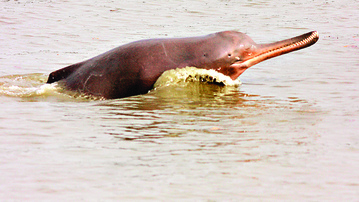


Kolkata: India’s push to expand cargo movement through inland waterways — promoted as a cheaper and cleaner alternative to road transport — could pose risks to the endangered Ganges river dolphin in several rivers of West Bengal, a new study has warned.
The research paper, “Navigating the Paradox: India’s Blue Economy and the River Dolphin Conservation Imperative,” published by the Observer Research Foundation (ORF) in February 2026, examines the environmental implications of expanding inland navigation across the Ganga–Brahmaputra river systems.
The Hooghly River forms the downstream stretch of National Waterway-1, India’s flagship inland shipping corridor running 1,620 km from Prayagraj to Haldia and being developed under the Jal Marg Vikas Project to boost cargo movement along the Ganga.
But the same river network is home to the Ganges river dolphin — India’s national aquatic animal and one of the world’s most endangered freshwater cetaceans.
India holds more than 80% of the global population of the species, yet nearly 90% of its habitat overlaps with existing or proposed national waterways, raising concerns over the ecological impact of expanding river navigation. Several rivers in West Bengal — including the Ajay, Damodar, Dwarka, Ichamati, Jalangi, Rupnarayan and Mahananda, as well as waterways in the Sundarbans delta — fall within the dolphin’s distribution range and are part of the national waterways network.
The Hooghly itself supports dolphin populations, though their presence in the lower stretch varies with tidal conditions. Dolphins tend to move upstream when saline water pushes inland during tidal surges. Researchers warn that dredging to maintain navigation channels, underwater noise from vessels and propellers, and the risk of boat collisions can disrupt the dolphins’ echolocation and feeding behaviour.
Evidence from the Ganga near Patna shows that about 5% of reported dolphin deaths have been linked to propeller strikes, highlighting risks from rising vessel traffic.
Inland waterways are central to India’s transport strategy. Shipping cargo through rivers costs about Rs 1.19 per tonne-kilometre, compared with Rs 2.28 by road, while producing significantly lower emissions.
The study says measures such as speed restrictions for vessels, quieter propulsion systems and monitoring of dolphin habitats will be crucial to balance economic expansion with biodiversity protection.