
Biodiversity: ZSI discovers two new species of jumping spiders
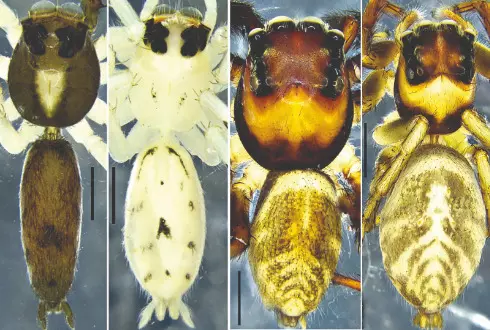


Kolkata: The Zoological Survey of India (ZSI) has discovered two new species of jumping spiders, Asemonea dentis and Colyttus nongwar, found in the biodiversity-rich state of Meghalaya. This significant finding reaffirms Northeast India’s status as a critical part of the Indo-Burma mega biodiversity hotspot.
The newly-described species belong to the Salticidae family, or “jumping spiders”, which are renowned for their exceptional vision, quick reflexes and unique predatory behaviour of stalking and pouncing on prey rather than spinning webs.
Asemonea dentis marks only the third Indian representative of the genus Asemonea, which is typically small and underexplored in the country. The species is named as ‘dentis’ due to a distinctive tooth-like projection observed on the male’s palpal femur, a key identification feature.Males feature a greenish-brown body with a V-shaped pale-yellow abdominal marking, while females are creamy white with black patterns. Colyttus nongwar represents the second species of the poorly-known Oriental genus Colyttus to be discovered in India. It is named after Nongwar village, the specific location in Meghalaya where it was found. Both sexes share an oval reddish-brown carapace and a light-brown abdomen marked by a creamy-white band in front and five chevron-shaped white patches toward the rear.
Souvik Sen, who led the research team alongside Sudhin PP, emphasised the importance of the findings. “These discoveries are just a glimpse of the exceptional biodiversity of Northeast India. Very few systematic surveys have been carried out here, and many more species are undoubtedly waiting to be found,” said Sen.
Dhriti Banerjee, Director of ZSI, said: “Findings like these underscores the need for more extensive surveys, especially in the Northeast, to document India’s vast and unique natural heritage. Meghalaya’s forests, sacred groves and cliffs are irreplaceable ecological assets.”
The complete scientific descriptions of Asemonea dentis and Colyttus nongwar have been published in the latest issue of Zootaxa.



