
Agri credit in Bengal set to ‘cross Rs 1L cr in FY26’
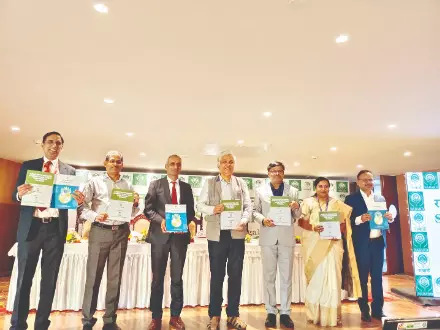


Kolkata: Bank lending to the agriculture sector in Bengal is poised to set a new record, with credit expected to cross the Rs 1 lakh crore mark by the end of the ongoing 2025–26 fiscal.
“In the month of January, bank credit in agriculture has crossed Rs 91,000 crore. Hence, credit lending for this financial year will for the first time cross the Rs 1 lakh crore mark. In the last fiscal, we had achieved Rs 97,000 crore in bank lending,” said Onkar Singh Meena, Principal Secretary of the state Agriculture department, while addressing NABARD’s State Credit Seminar on Friday.
Meena urged senior members of the State Level Bankers’ Committee present at the seminar to lay special emphasis on ground-level credit disbursement, particularly in view of the state’s focus on value-added crops such as aromatic rice, fruits and low glycemic index paddy varieties.
The credit projection for the agriculture sector for the 2026–27 financial year has been pegged at Rs 1.37 lakh crore. The total projected credit flow in the priority sector — comprising agriculture, MSME, housing, education, export and climate-resilient building projects — has been estimated at Rs 3.99 lakh crore for Bengal in 2026–27.
According to P.K. Bhardwaj, Chief General Manager, NABARD, the agriculture sector in Bengal has been registering steady annual growth of 4–5 per cent, with loan repayment rates exceeding 90 per cent. “The projection of bank lending in MSME is Rs 2.12 lakh crore for the 2025–26 fiscal and till December the lending has been Rs 1.99 lakh crore. Hence, the target in MSME lending will also be achieved,” Bhardwaj said.
Prabhat Kumar Mishra, Additional Chief Secretary of the state Finance department, highlighted potential growth areas across regions.
He said the Hills offer scope for expansion of floriculture, orchids and fruits; the sub-Terai region has potential for spices; the alluvial zone is suitable for value-added crops; and the Sunderbans can be developed into an organic hub.



